
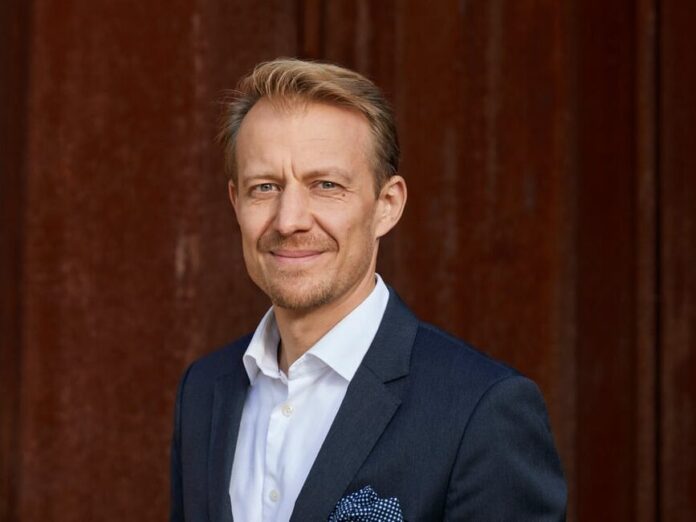
Stockholm (NordSIP) – Denmark’s €6.1 billion LD Pensions (LD Fonde in Danish) manages two legacy savings funds for Danish workers. The Holiday Allowance Fund (Lønmodtagernes Feriemidler in Danish) and the Cost-of-Living Allowance Fund (Lønmodtagernes Dyrtidsmidler) are both funds with a one-off inflow. The latter stems from a state-sponsored initiative dating back to 1980, and the former came from companies owing employees a year’s worth of holiday payments as local regulatory changes were being implemented in 2019. Nevertheless, the two funds remain popular with their members, providing cost effective, competitive investment returns. This means that despite all the members of the Cost-of-Living Allowance Fund being eligible to withdraw their money, outflows remain low. NordSIP spoke to Chief Investment Officer (CIO) Kristoffer Fabricius Birch to get further insight into LD Pensions’ enduring popularity with Danish savers and his organisation’s sustainable investment strategy.
“We have a CO2 reduction target for 2030 and a net-zero target for 2050, and are members of Nature Action 100,” explains Birch, adding “We are also dedicated to active ownership. We vote on many of our portfolio companies, basing ourselves on a template that we have built in co-operation with our external managers as well as our proxy voting partner Minerva Analytics.” Birch’s team also comprises two dedicated ESG analysts, who help review supporting materials relating to investee companies’ AGMs. As of January 2026, LD Pensions’ overall portfolio stewardship strategy will be supported by Federated Hermes’ EOS division, who were recently appointed to replace previous incumbent Morningstar Sustainalytics.
Ramping up company dialogue despite the headwinds
On 18 September 2025, LD Pensions was named Engagement and Stewardship Champion at the Institutional Investor Recognition Awards. In the first half of this year, LD Pensions voted at the AGMs of 704 different companies, 102 more than during the same period in 2024. Birch points to the stewardship template as a key factor in this achievement: “It is a lengthy template, which covers multiple governance and sustainability themes including company gender diversity. We have also set a particularly high standard on the governance side.” While other major Danish institutional investors have divested from certain US-managed pooled funds over the past year, Birch clarifies that LD Pensions has not felt compelled to follow suit largely thanks to the control over responsible investment policy afforded by its segregated mandate set-up. He also refers back to the benefits of the rigorous manager selection process, during which he and his team aim to identify like-minded partners with convincing sustainability credentials.
Like many of its peers, LD Pension is having to contend with the anti-ESG backlash in the United States (US), which has made company dialogue and shareholder proposals harder for institutional investors. There may be legal mechanisms that can unblock the situation in some cases, according to Birch: “We are looking into the possibility of shareholder derivative suits, which could be used to force companies to disclose material ESG information or alter certain behaviours or policies.”
No-compromise stance on human rights
LD Pensions’ list of sector exclusions has been somewhat loosened to re-incorporate specific European-based defence manufacturers. However, as Birch explains, certain human rights-related criteria have been tightened: “Having recently started investing in emerging markets debt, we decided to exclude sovereign or state-owned issuers in countries with a human rights record below our minimum threshold. We then expanded those standards to the global equity portfolio as well.” LD Pensions is a member of the Labour Rights Investor Network (LRIN) and is currently evaluating its holding of Tesla shares on that basis.
Tackling biodiversity loss and the Big Tech dilemma
Having signed up the Nature Action 100 (NA100) collaborative engagement initiative, LD Pensions is engaging directly with Kraft Heinz on the topic, although Birch believes the lack of consistent and reliable data makes it a difficult process for the time being: “We nevertheless maintain a nature and biodiversity-related watchlist of companies, informed by NA100 as well as data on relevant controversies from an external news feed.”
Birch also hopes to get support from his external engagement and stewardship providers on the controversial aspects of the big technology companies and artificial intelligence (AI): “It is hard to tackle all the issues of energy and water consumption, intellectual property, or harmful algorithms. Those companies are such a large component of the investment universe that you can’t simply exclude them without suffering a huge tracking error.” Birch believes that some of these issues are better dealt with at policy level.
Birch’s outlook on the sustainability front focuses on what he terms real-world decarbonisation. Rather than reducing the carbon footprint of the listed portfolio, he would hope to direct investments towards projects that have greater direct impact. “It’s about investing in the right areas,” Birch explains, “For example there is not enough money going into renewable energy in emerging markets, where they need it the most.” Sustainable investors are faced with an ever-increasing ‘to-do’ list and a proliferation of interconnected crises and challenges. Birch appears determined to use LD Pensions’ leverage as an institutional investor where it is most effective and best meets the expectations of the two funds’ membership base. While he does not expect things to get any easier in the coming years, LD Pensions has set itself up with the right external partners to help navigate the choppy waters ahead.
