
This Content is Available with the Unlimited Plan or with Credits
Use your credits to unlock
Unlock credits cost: 2
Available credits: N/A
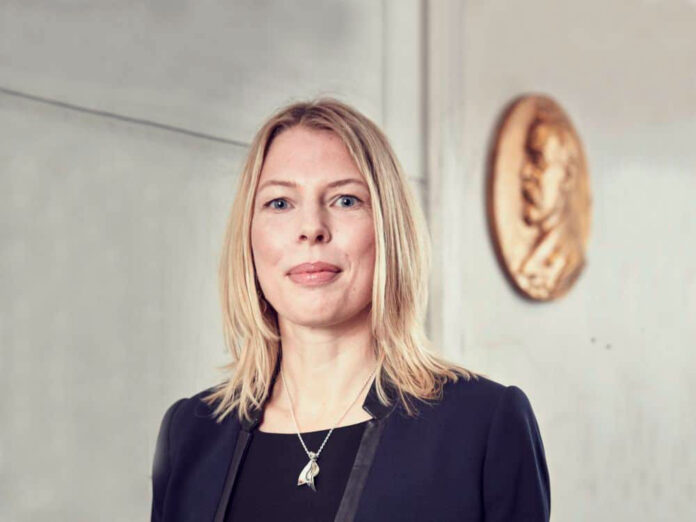
There are investment mandates, and then there is this one. As Chief Investment Officer of the Nobel Foundation, Ulrika Bergman is the steward of one of the world’s most symbolically loaded pools of capital, the endowment that funds the Nobel Prizes, those annual verdicts on who has done most for humanity. The weight of the job is not lost on her. “Every now and then, someone says ‘oh, that’s a huge responsibility’ and cracks a joke about what could happen if something goes wrong – and in those moments, I get a little nervous, and I remember that it’s the Nobel Prize money. It is, of course, a responsibility that I take very seriously. But I find it so exciting that I usually don’t think about it that much.”
That mixture of levity and seriousness captures something essential about Bergman: she is a rigorous, methodical investor, but one who seems genuinely energised by an unusual mandate rather than burdened by it.
From SEB to Stockholm’s Most Storied Endowment
Bergman’s background is firmly quantitative. Before joining the Nobel Foundation, she served as CIO for Global Equities at SEB Investment Management, heading a ten-person team managing SEK 170 billion in international equity and balanced mutual funds, employing modern financial and quantitative methods. According to her LinkedIn profile, she also held advisory roles at Stiftelsen för Strategisk Forskning (SSF) and the Wenner-Gren Foundations, suggesting a career arc that gravitates toward mission-driven, long-duration capital — a natural fit for the Nobel Foundation’s perpetual mandate.
She took up the CIO role in May 2017, succeeding Gustav Karner, who left to become CIO of Apoteket’s pension fund. In her own statement at the time, she framed the appointment not just as a career move but as a philosophical one: “Asset management occurs with a perpetual time horizon and for the purpose of rewarding contributions for the greatest benefit to mankind. This is a sustainability perspective that is more topical today than ever. I view it as a challenge to bring it all the way into the management of the Foundation’s assets.”
An Engineer’s Approach to a Perpetual Portfolio
Since joining the Foundation, Bergman has gradually re-engineered the portfolio to rely less on public equities and traditional fixed income, while improving diversification without materially increasing overall risk. The portfolio today, which has grown to around SEK 6.6 billion, is broadly allocated across equities, alternatives, real assets, and fixed income — but the specific mix reflects a series of deliberate, incrementally executed decisions rather than bold macro calls.
The clearest illustration of her investment philosophy is her approach to alternatives. In an environment of near-zero interest rates, Bergman made an unconventional bet: hedge funds as a structural replacement for fixed income. The Foundation has maintained an industry-unusual strategic allocation of 25 percent to hedge funds, serving as replacement for fixed income with a risk-return profile sitting between fixed income and equity risk. Even as interest rates rose, making conventional bonds attractive again, she held firm. “To reduce the hedge fund allocation is not something we have decided or see as necessary at this stage, because our portfolio has been able to generate good returns and diversification benefits. Hedge funds are the quickest ones to react and that helps,” she told HedgeNordic. The conviction proved well-founded: the Foundation’s hedge fund portfolio delivered a 13 percent return in US dollars in 2024, ranking it among the top hedge fund portfolios of institutional investors in the Nordics.
The emphasis within hedge funds is on concentration and quality over breadth. The Foundation’s hedge fund portfolio comprises just four managers, primarily employing multi-strategy approaches. “We are a small organisation, well-known but small in terms of resources,” says Bergman. “So we try to be very selective in all asset classes and choose managers with long track records, strong reputations, responsible investing policies.” More recently, she has noted a structural shift in the industry itself: larger multi-strategy firms are growing even bigger, driven by a war for talent, and their capacity to attract people, acquire data, and invest in technology makes this trend likely to continue, even as AI advances, Bergman believes, because human expertise remains critical for trading.
Private Equity: Embracing Illiquidity for the Right Reasons
Another notable evolution under Bergman has been the deliberate expansion into private equity. In a 2022 Citywire Selector interview, she explained the logic: the Foundation decided to gradually increase its private equity exposure from 7% to 15% of the total equities allocation, aiming to ensure the annual return goal of 3% could be met in a future of high public market valuations and structurally lower returns. Venture capital, which might seem at odds with the Foundation’s need for stability, she argued is actually complementary: “Yes, there is a large risk that companies go bankrupt. But at the same time, it’s the kind of risk that’s furthest away from public stock in terms of correlation, and it also gives you access to innovation. We consider it a good complement to the portfolio.” The key, as always, is manager selection — only teams with long track records and stable investment personnel make the cut.
Defensive Positioning for an Uncertain Decade
By early 2026, Bergman’s posture had shifted toward greater caution. Fixed income remains anchored conservatively at around 10% of the portfolio, concentrated in Swedish government and mortgage bonds. “With credit spreads tight, government bonds offer a cleaner hedge if growth weakens and rates eventually fall,” she told Markets Group. On private credit — one of the most crowded corners of global markets — she is selective but not dismissive: the Foundation’s exposure is concentrated in senior secured lending in Europe and asset-backed strategies. She rejects the idea that private credit is in a bubble, arguing that tighter bank regulation and the expansion of private equity have created structural demand — but she is not actively looking to expand those allocations, particularly as public fixed income can now compete on yield without locking up capital for a decade.
Real estate, after a difficult few years, is beginning to look interesting again. Bergman sees early signs that the bruising Nordic real estate downturn has created investable entry points, and is focusing particularly on Sweden, where higher rates and forced selling have weighed on valuations. Rather than targeting a single segment, the Foundation is seeking managers flexible enough to rotate across logistics, residential, and other areas as conditions evolve.
The Weight of an Eternal Mandate
What sets Bergman apart from most institutional investors is not any single asset class view but the clarity with which she has defined what the mandate actually requires. The Foundation’s objective is a real annual return of 3%, enough to fund prize payouts, administration, and laureate selection without eroding the capital base. “We wouldn’t want to have to cancel the Nobel Prize,” she has said, with characteristic understatement.
This framing, existential but not paralysing, shapes Bergman’s views. Portfolio changes are incremental. Typically, Bergman limits changes to replacing one or two managers per year. More effort has gone into building a disciplined investment process around risk budgeting, governance, and responsible investing. The result, over nearly eight years, is a portfolio that has quietly outperformed its modest stated target: as of December 2024, the Foundation reported three- and five-year returns of 6.6% and 9.2% respectively.
It is, in many ways, the anti-glamour of institutional finance without bold macro bets, performance chasing nor headline risk. Just a former quantitative equity manager from SEB, working through an investment committee in Stockholm, making sure that Alfred Nobel’s 125-year-old promise to humanity stays funded. That, it turns out, is more than enough.
Press sources:
HedgeNordic: Nobel Foundation’s Hedge Funds: Evolving Past Fixed Income Replacement (May 2025)
HedgeNordic: Hedge Funds – Nobel’s Alternative to Fixed Income (November 2023)
HedgeNordic: The Role and Value of Hedge Funds (May 2019)
HedgeNordic: Nordic Allocators’ View on Real Estate and Infrastructure (November 2017)
Citywire: Why Nobel Foundation’s CIO is turning to private equity (February 2022)
Finansliv: Så mycket växer Alfred Nobels pengar varje år (December 2019)
Lannebo: Nobelstiftelsen om kapitalförvaltning – igår, idag, imorgon (October 2024)
